
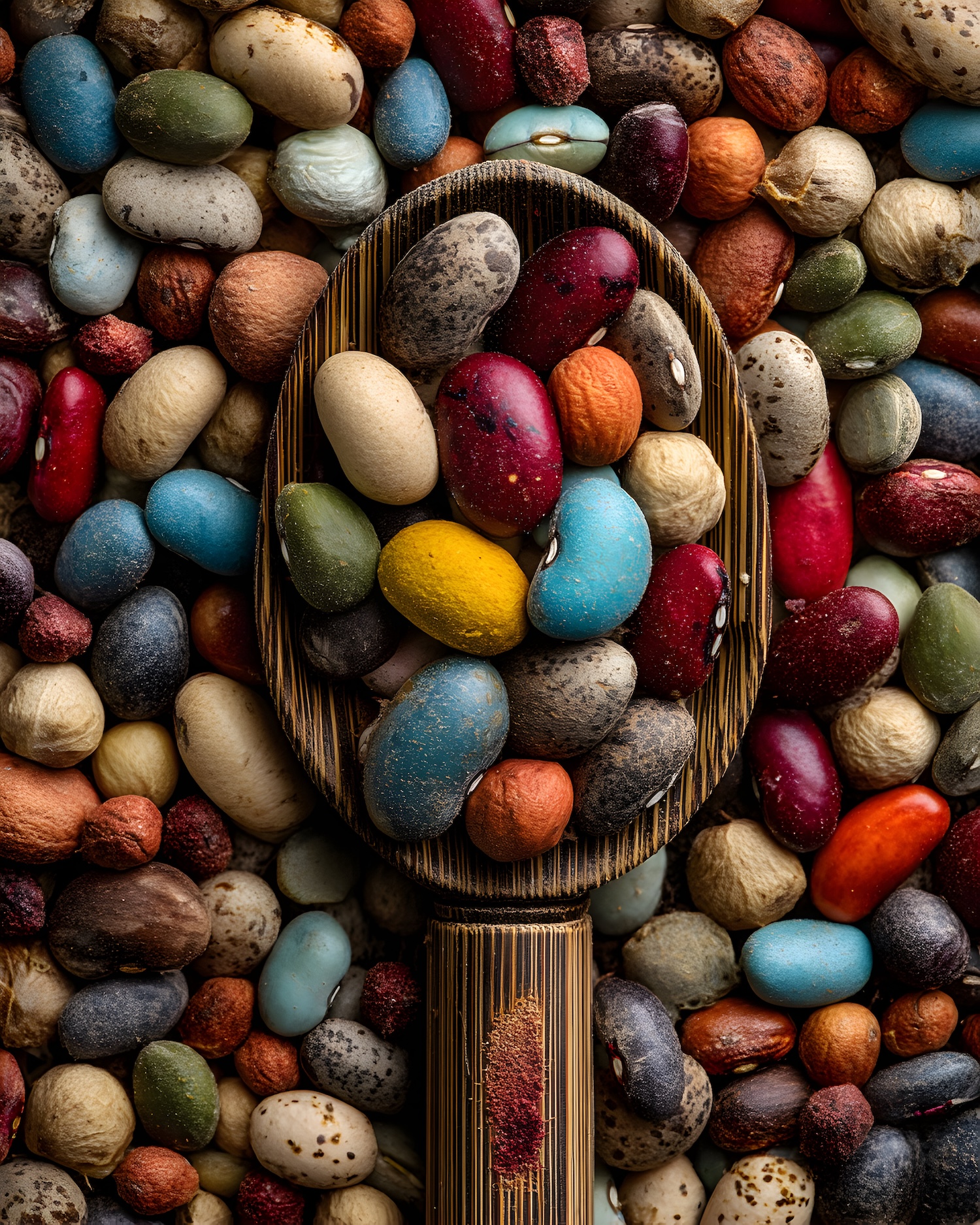
Friends, beans are not boring. Beans are magic. And we’re here to convince you.
Beans Have Been Around Forever (Literally)
Let’s start with a little perspective. Beans are not some trendy superfood someone discovered last Tuesday. Humans have been growing and eating beans for over 9,000 years — the oldest evidence comes from Thailand. In Mexico and Peru, people were cultivating beans as far back as 7,000 BC. Ancient Egyptians tucked beans into the tombs of their kings as food for the afterlife. If beans were good enough to bring into eternity, they’re good enough for your Tuesday dinner.
Then there’s one of my favorite moments in food history, “Three Sisters”. Native American peoples like the Haudenosaunee grew beans alongside corn and squash in a beautifully clever system: the corn grew tall, the beans climbed up the stalks, and the squash spread across the ground, keeping weeds out and moisture in. The beans even pulled nitrogen from the air and returned it to the soil, essentially fertilizing the whole garden for free.
And here’s the fact that never fails to make people smile at dinner parties: four of the most powerful families in ancient Rome named themselves after legumes. The Fabii (fava bean), the Lentuli (lentil), the Pisones (pea), and, most famously, the Cicero family, named after the chickpea (cicer). The great orator Cicero reportedly had a chickpea-shaped wart on his nose. So yes, one of history’s greatest minds was literally named after a bean. You’re welcome.
I
Some Facts That’ll Make You Smile
Before we get into the good-for-you stuff, let’s have some fun:
- There are over 400 varieties of the common bean alone, from jet-black turtle beans to speckled heirlooms with names like “Jacob’s Cattle”.
- Bean soup has been on the U.S. Senate restaurant menu every single day since 1903 — apparently, senators take their legumes seriously.
- In Japan, people throw roasted soybeans during the spring festival Setsubun while shouting “Out with demons, in with luck!” — beans as a demon repellent is an underrated use case!
- Every 20 grams of beans you eat per day — about two tablespoons — is linked to an 8% lower risk of dying in any given year. Two tablespoons. That’s basically nothing!
So, What’s Actually in a Bean?
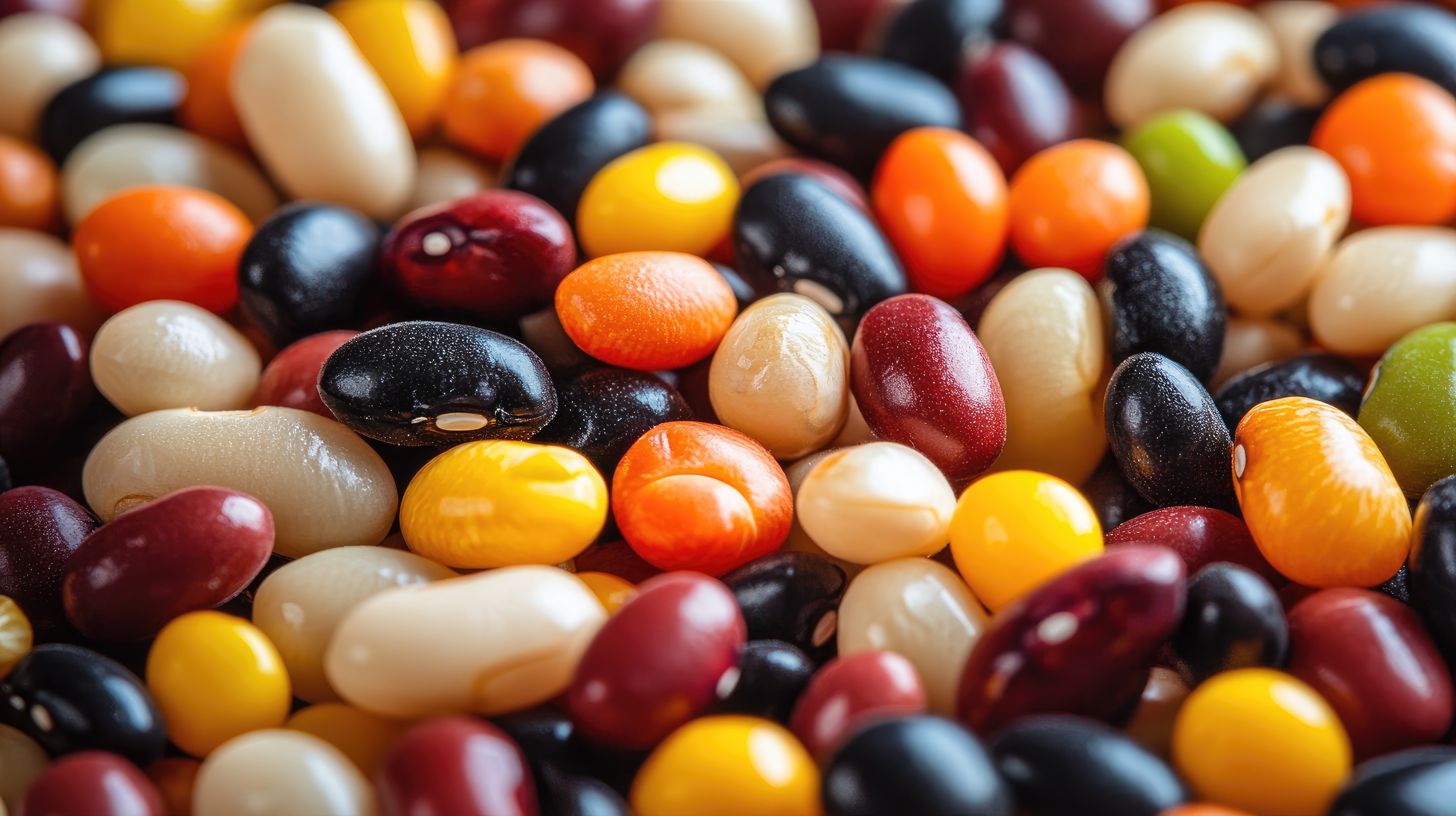
Here’s where I geek out a little, but bear with me, because the nutrition story is genuinely wild. In one single cup of cooked beans, you get roughly 15–18 grams of protein, 12–16 grams of fiber, about 70% of your daily folate needs, and solid amounts of iron, potassium, magnesium, and zinc. All of that, for around 225 calories.
What makes beans truly special is that they somehow deliver both high protein and high fiber in one package. Think about it: most protein-rich foods (meat, eggs, dairy) have almost no fiber. Most fiber-rich foods (veggies, fruit) don’t have much protein. Beans do both at once. That’s not just convenient; it’s nutritionally rare. It’s like finding out your favorite cozy sweater is also waterproof.
The Health Benefits Are Kind of Mind-Blowing
Eating beans regularly isn’t just “good for you” in a vague, generic way. The research is specific, and it’s impressive:
- Your heart will thank you. A 2001 study found that eating beans just four times a week cut heart disease risk by 22%. The soluble fiber in beans binds to cholesterol in your gut and helps escort it out of your body.
- Blood sugar stays steady. Beans have a very low glycemic index, meaning they digest slowly and keep your energy levels steady instead of sending them on a rollercoaster. People who eat beans regularly tend to have lower overall blood sugar levels.
- Your gut gets happy. The resistant starch in beans feeds the good bacteria in your digestive system, supporting a healthier microbiome.
- You’ll feel full — for real. A review of 21 clinical trials found that eating beans daily led to weight loss and reduced body fat, even without intentional calorie reduction. The fiber-protein combo keeps you genuinely satisfied.
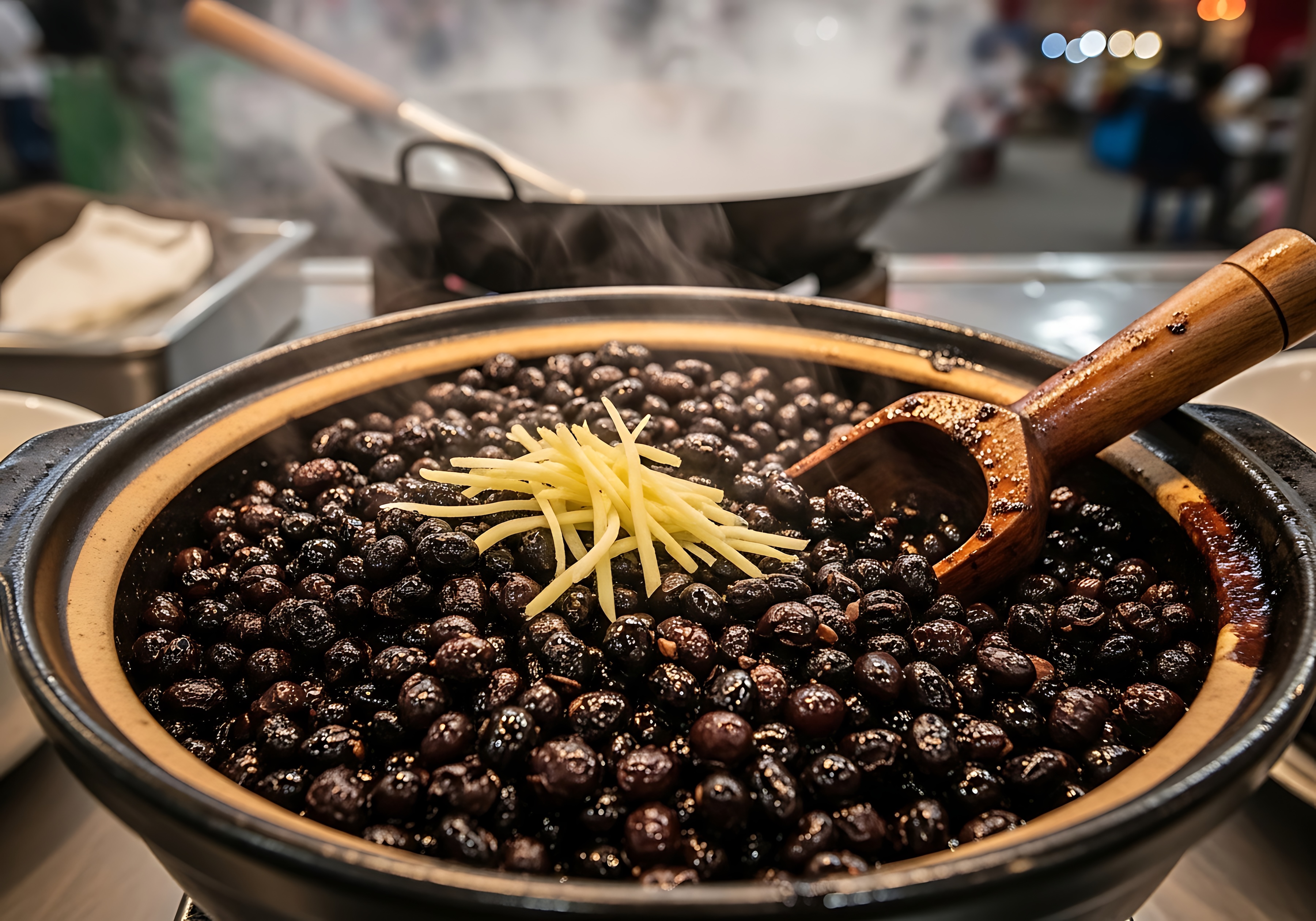
- You might just live longer. Beans are a cornerstone food in every single Blue Zone — the regions around the world where people routinely live past 100. Black beans in Costa Rica’s Nicoya Peninsula, lentils and white beans in Sardinia, soybeans in Okinawa. These communities eat beans nearly every single day, and researchers think it’s one of the biggest reasons why.
Fresh, Canned, or Dried? A Guide to Buying Beans
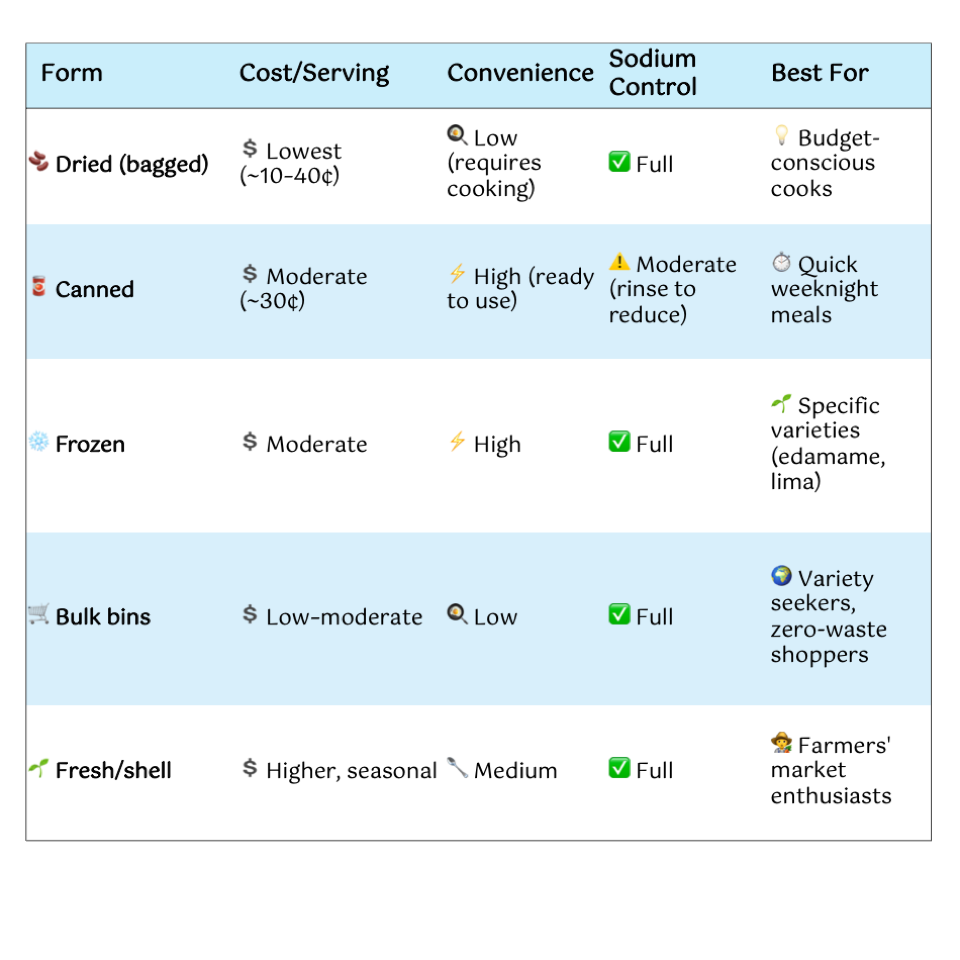
Beans are one of the most nutritious and budget-friendly foods available, and Americans have several great options for how to buy them — each with its own unique set of advantages. Here’s a friendly breakdown of the most common forms:
Dried Beans (Bagged)
Dried beans are the most economical choice by far. A one-pound bag offers roughly 13 servings and costs just $1–$2, making each serving as little as 10–40 cents. They’re also nutritionally superior — home-cooked dried beans are significantly more nutrient-dense than canned and are essentially sodium-free, giving you full control over seasoning. The main trade-off is time: most require soaking and hours of cooking, though a pressure cooker or Instant Pot can dramatically cut that down.
Canned Beans
Canned beans are the go-to for convenience — they’re pre-cooked and ready to use straight from the can in minutes. A standard 15.5 oz can typically costs $1.12–$1.58 and provides about 3.5 servings. It’s also worth noting that steel can prices have risen 16% over the past year, meaning canned goods, including beans, may inch upward in price through 2026. Buying store brands or stocking up during sales remains the best strategy for keeping costs down. The downside of canning is sodium: a typical serving can contain around 300 mg, though draining and rinsing canned beans removes about 40% of that sodium. Opting for low-sodium or no-salt-added varieties is another easy fix recommended by the American Heart Association.
Frozen Beans
Some varieties — like edamame, lima beans, and fava beans — are widely available frozen. Frozen beans retain most of their nutritional value because they’re flash-frozen shortly after harvest and require no soaking or lengthy prep. They’re slightly pricier per serving than dried but far more convenient.
Bulk Bins (Dry)
Many natural grocery stores, like Sprouts or Whole Foods, offer dried beans in bulk bins where you can scoop exactly what you need. This is a great middle ground: you get the nutrition and cost benefits of dried beans without committing to a full bag, and you can sample specialty or heirloom varieties that aren’t always pre-packaged.
Fresh/Fresh-Shelled Beans
Fresh beans (such as fresh shell beans, green beans, or edamame) are occasionally available at farmers’ markets or specialty grocers, especially in season. They cook quickly, skip the soaking step entirely, and have a vibrant flavor and tender texture that dried beans can’t quite replicate. They’re perishable, so use them within a few days, but they’re a wonderful seasonal treat.
Ready to Eat More Beans?
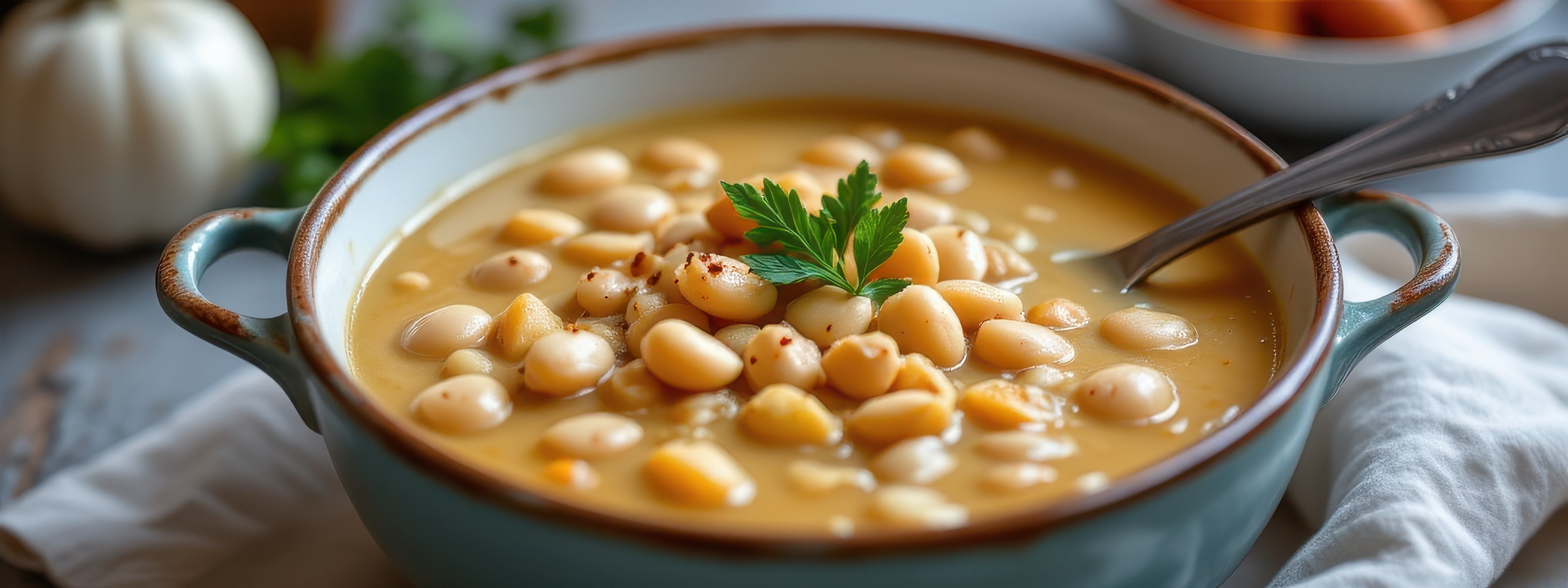
The good news is that adding beans to your diet is genuinely easy. Toss white beans into soups. Add black beans to grain bowls. Blend chickpeas into hummus, roast them for a crunchy snack, or simmer them in a tomato-based stew. Cook a big pot of pinto beans on Sunday and eat them all week. The flavor adapts to whatever seasoning tradition you love — cumin and chili for Mexican-inspired dishes, coconut milk and curry for South Asian flavors, garlic and olive oil for a Mediterranean vibe.
If you’re new to beans and worried about digestive discomfort, start slow, a small portion a few times a week, and make sure to rinse canned beans well. Your gut microbiome adapts over time, and most people find that discomfort fades as beans become a regular part of their diet.
Beans are ancient, democratic, delicious, and extraordinarily good for you. They’ve fed empires, shaped ecosystems, and kept humans alive through countless centuries of hardship. The least we can do is give them a proper place at the table.